
Every source, about every company, connected.
The Orbit Knowledge Base is the connected data layer beneath everything. Filings, transcripts, disclosures, news, market data, and your own internal research, all anchored to a single master record of every company, so they can be read together as one body of knowledge.
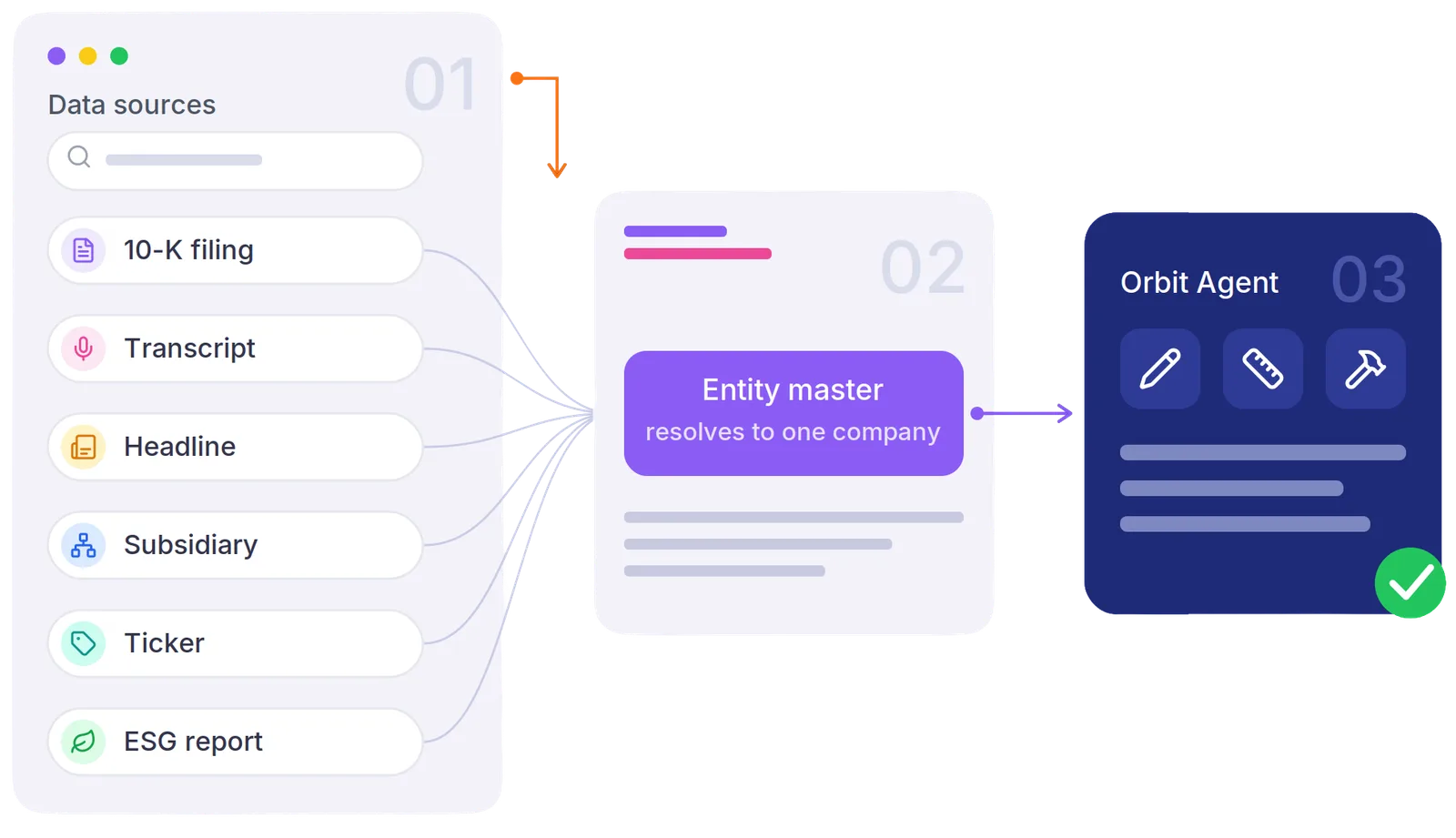
The entity master
The least visible part of Orbit, and the most important.
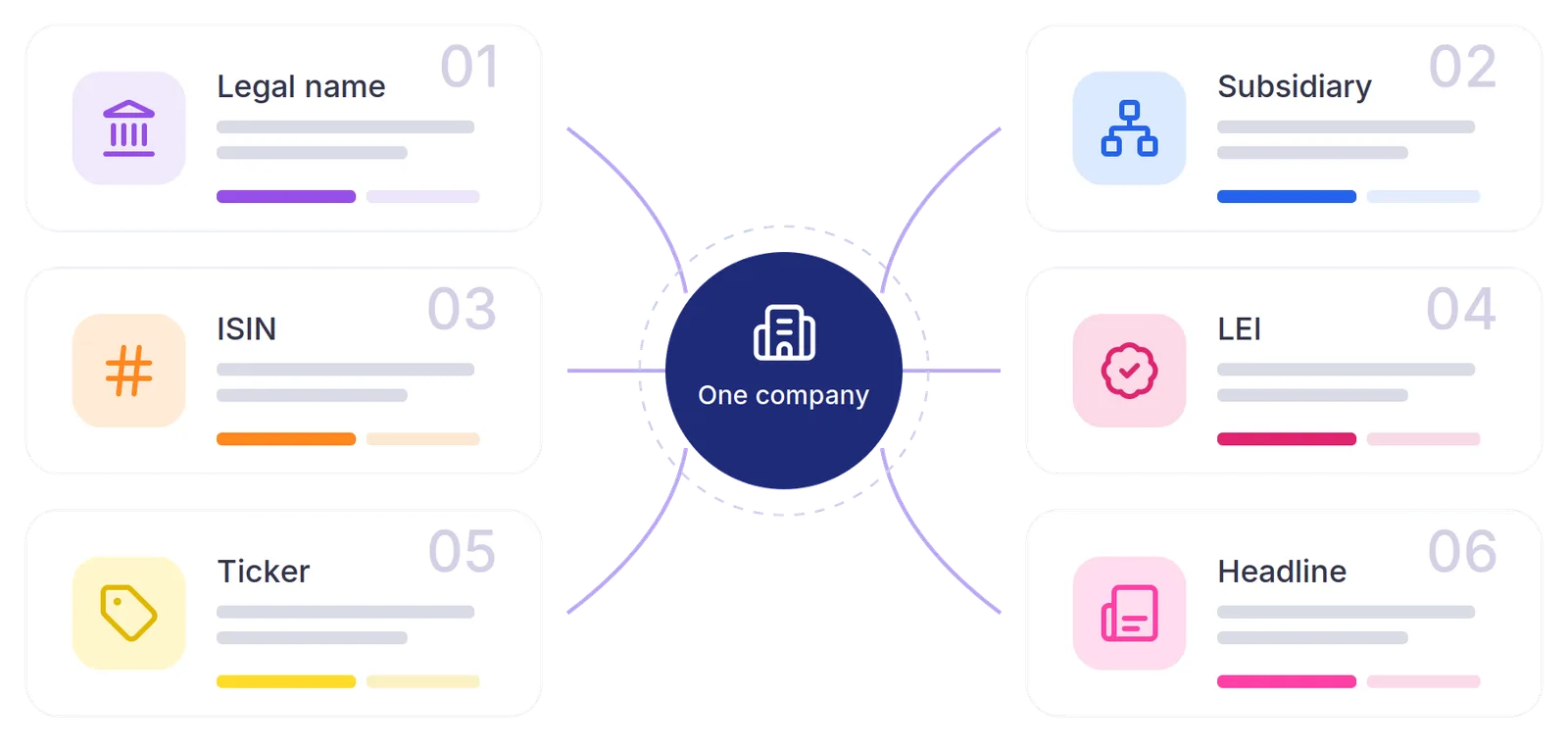
A single company appears across the world's data under many names and identifiers: a legal name in a filing, a ticker on an exchange, a shortened name in a headline, a subsidiary in a broker note, a different romanization in another market. To a person these are obviously the same company. To a system they are not, unless something reconciles them. The entity master is that something.
One company, read as one
The entity master resolves every document, every data point, and every reference to the one company it actually concerns. Ask about a company and the answer draws on everything Orbit knows about it, from every source, without anyone first working out which records refer to which entity.
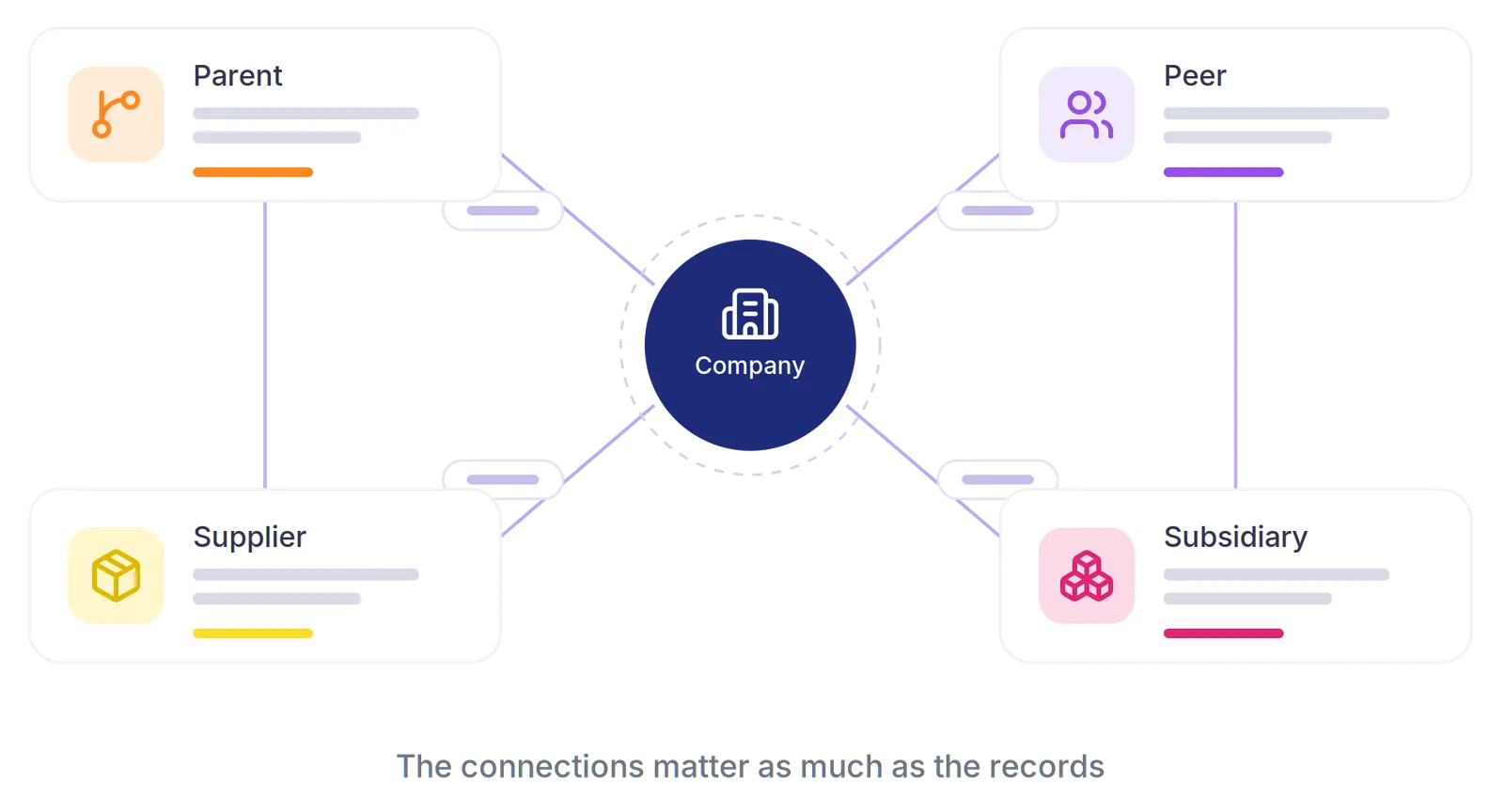
The relationships matter as much as the records
The entity master holds not just companies in isolation but how they connect, corporate structures and the links between related entities, so analysis can follow those connections rather than stopping at a single name. This is what lets monitoring, screening, and thematic work reach across a universe rather than one company at a time, and what surfaces the hidden beneficiaries others miss.
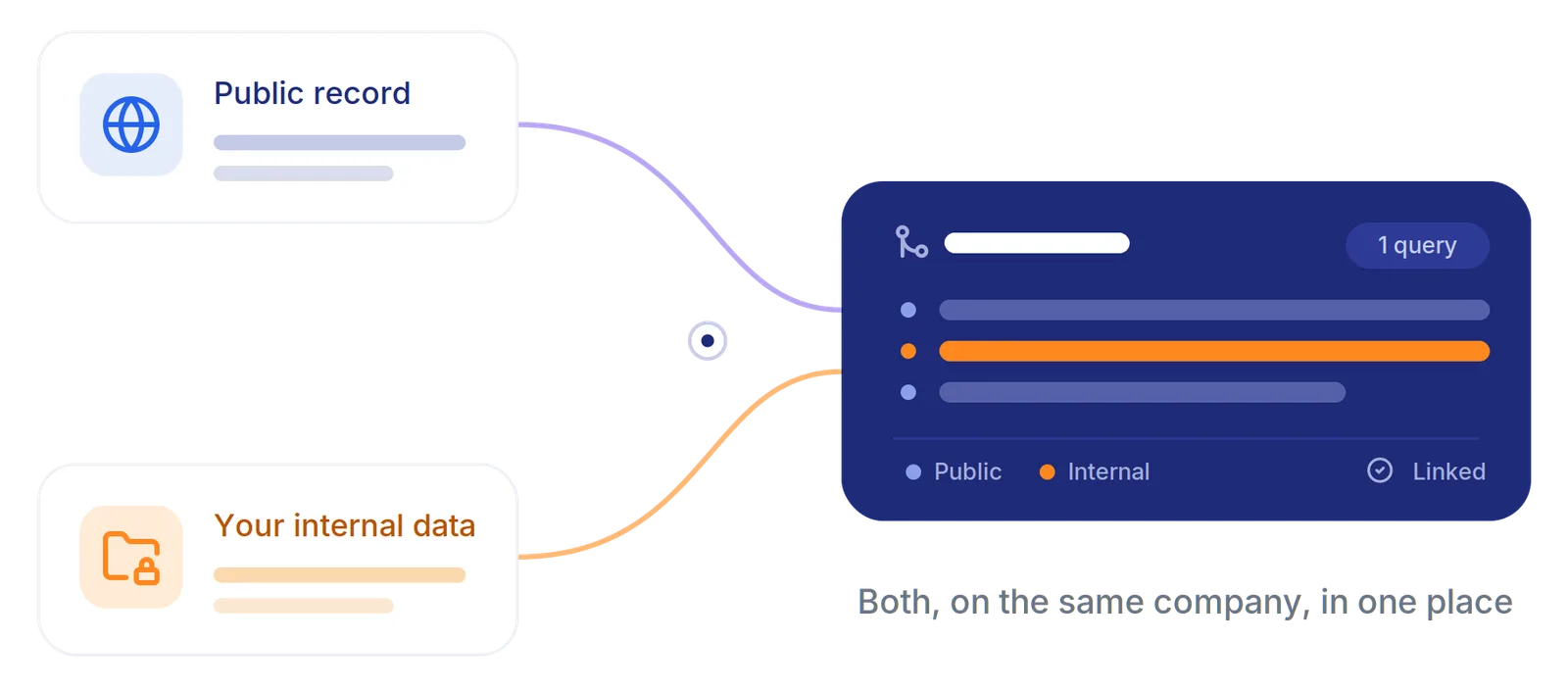
Where your own data compounds
When internal research, broker notes, meeting notes, proprietary models, is brought into Orbit, it is anchored to the same entity master as the public corpus. Your private view of a company then sits directly alongside the full public record of that same company, in one place, in one query.
From documents to structured data
Fast and consistent, without ever losing the source.
Documents are read once, in advance, and turned into structured records anchored to the right company, across 308 document types and with better than 99% parsing accuracy, tables and financial statements preserved with their structure intact. From then on, questions are answered from those records rather than by re-reading the raw text. The original documents stay permanently queryable beneath them.
Consistency
Because the reading is done once and stored, every user works from the same result. The answer does not depend on who asked, when, or how they phrased it, which is what lets a company be compared against itself across quarters and against its peers.
Speed and scale
Answering from structured data is far quicker and cheaper than re-reading documents on demand. That is what makes it practical to monitor thousands of holdings overnight or screen a whole market at once.
Traceability
Each structured record carries its lineage back to the document it came from, so any figure can be traced to its source and checked. The structured layer is faster, but it never becomes a black box.
Some of what matters in research lives in language, the exact wording of a risk disclosure, the tone of a management answer. For that reason the full document layer is kept live and directly queryable, by design, so any question that needs the words themselves can be answered from the source.
What is in the Knowledge Base
Comprehensive, global, and more than a decade deep.
Across 75,000+ listed companies and over a decade of history, spanning the Americas, APAC, and Europe, Orbit maintains not just the documents but the structured data drawn from them. A decade of processed history cannot be back-filled, and it compounds: every new document is read against everything before it.
Core Filings & Governance
Annual and interim filings, ownership, and governance records, anchored to the right entity and ready to compare across markets.
Explore datasetEarnings Intelligence
Earnings call transcripts and results across markets and languages, structured for comparison across quarters, companies, and sectors.
Explore datasetCorporate Events & Actions
The announcements, disclosures, and corporate actions that move a company, tied to the right entity and ready to monitor.
Explore datasetSustainability & Policies
Sustainability, ESG, and policy documents with standardized categorization, the same companies seen through a sustainability lens.
Explore datasetRegulatory Intelligence
Regulatory documents with jurisdiction tagging, kept current across the markets a firm operates in.
Explore datasetNews & Market Data
News and pricing brought into the same connected layer, anchored to the companies they concern.
Popular collections
The coverage teams come to Orbit for.
These are curated views drawn from the datasets above, the coverage most institutional teams ask about first. Each is available in the platform, through the API, or as a direct feed.
Global Exchange Filings
Full text and structured metadata across the Americas, APAC, and Europe, market by market, available before next market open.
Explore collectionGlobal Earnings Transcripts
Earnings call transcripts across multiple markets and languages, structured for comparison across quarters, companies, and sectors.
Explore collectionChina Market Intelligence
Eight datasets covering the full A-share record, translated, structured, point in time, and tied to the same entity master as every other market.
Explore collectionConsume it your way
In the platform, through an API, or as a direct feed.
Orbit Insight
Work with the connected data directly in the platform, through the Research Agent, agents, and the use-case library.
API & MCP
Programmatic access and MCP endpoints that bring the Knowledge Base into your own applications and AI tools.
Dataset access
Structured datasets delivered through secure, authenticated channels for teams that integrate raw data into their own systems.
The connected layer your research can build on.
See the Knowledge Base and the entity master that makes it more than a pile of sources. These are conversations that matter deeply to us at Orbit.